

This is an old revision of the document!
Nexys Video
Introduction
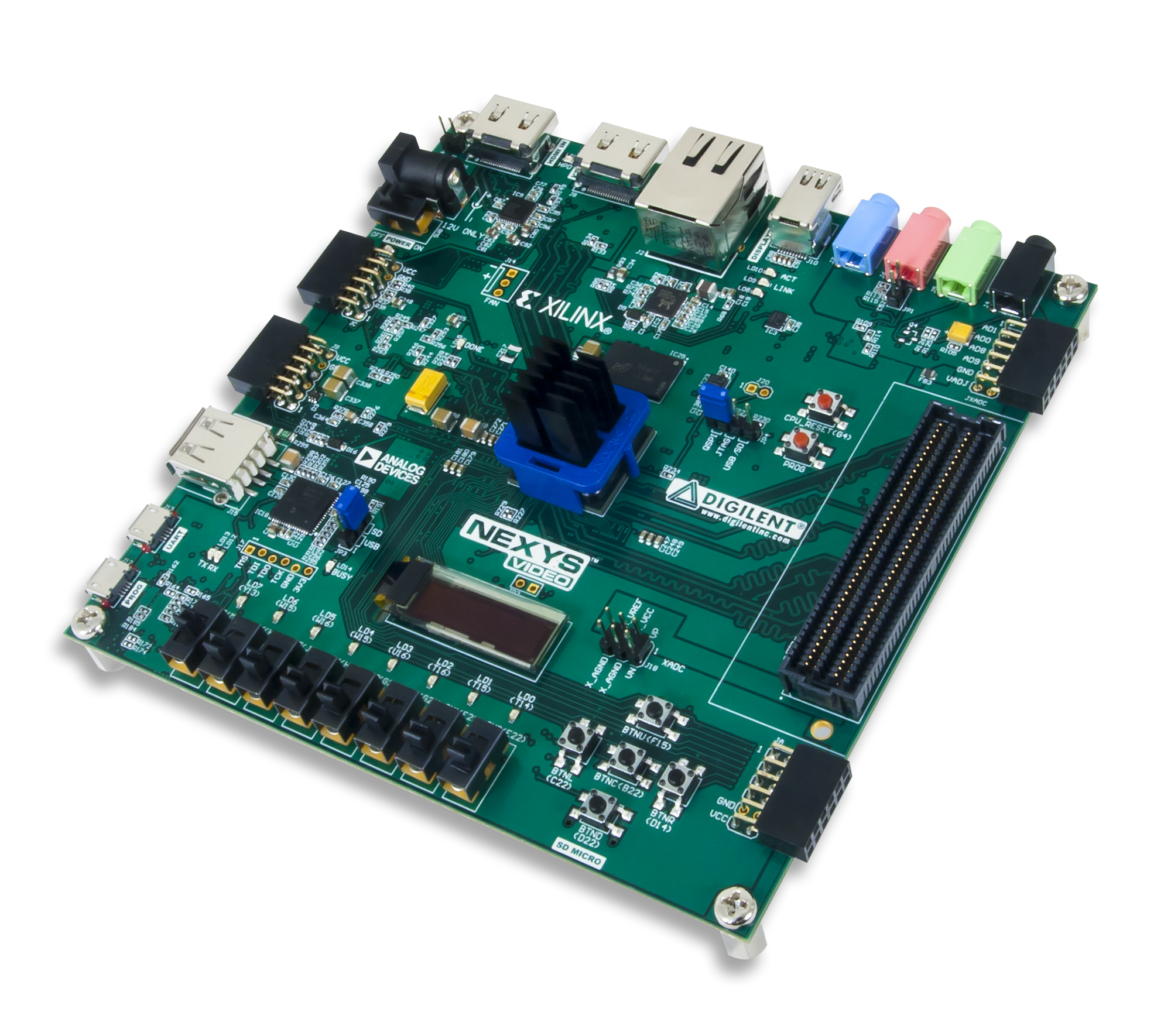
The Nexys Video board is a complete, ready-to-use digital circuit development platform based on the latest Artix-7™ Field Programmable Gate Array (FPGA) from Xilinx. With its high-capacity FPGA (Xilinx part number XC7A200T-1SBG484C) – the largest Artix-7 die at the time of writing, generous external memories, high-speed digital video ports, and 24-bit audio codec, make the Nexys Video is perfectly suited for audio and video processing applications. Several built-in peripherals, including Ethernet, USB-UART, and a high bandwidth USB data transfer protocol expand the connectivity of the Nexys Video so that it can cleanly be integrated as a single component of large system. The Nexys Video also includes provisions for direct human interaction with a connector for USB-HID devices, an OLED Display, and a vast assortment of switches, buttons and LEDs. Lastly, the FMC and Pmod Connectors can be used to add virtually any functionality or connection interface your application demands.
The Artix-7 FPGA is optimized for high performance logic, and offers more capacity, higher performance, and more resources than earlier designs. Artix-7 200T features include:
- 33,650 logic slices, each with four 6-input LUTs and 8 flip-flops
- Close to 13 Mbits of fast block RAM (3x more than the Nexys 4 DDR)
- Ten clock management tiles, each with phase-locked loop (PLL)
- 740 DSP Slices
- Internal clock speeds exceeding 450MHz
- On-chip analog-to-digital converter (XADC)
In addition to being compatible with Xilinx’s ISE toolset, The Nexys Video also works with Xilinx’s the new high-performance Vivado ® Design Suite. It is supported under the free “Webpack” license, so designs can be implemented at no additional cost. This free license now includes the ability to create Microblaze soft-core processor designs (in Vivado only), which greatly reduces the time needed to implement complex systems. Design resources and example projects are available for download at the Nexys Video Resource Center, accessible from reference.digilentinc.com.
Revision History
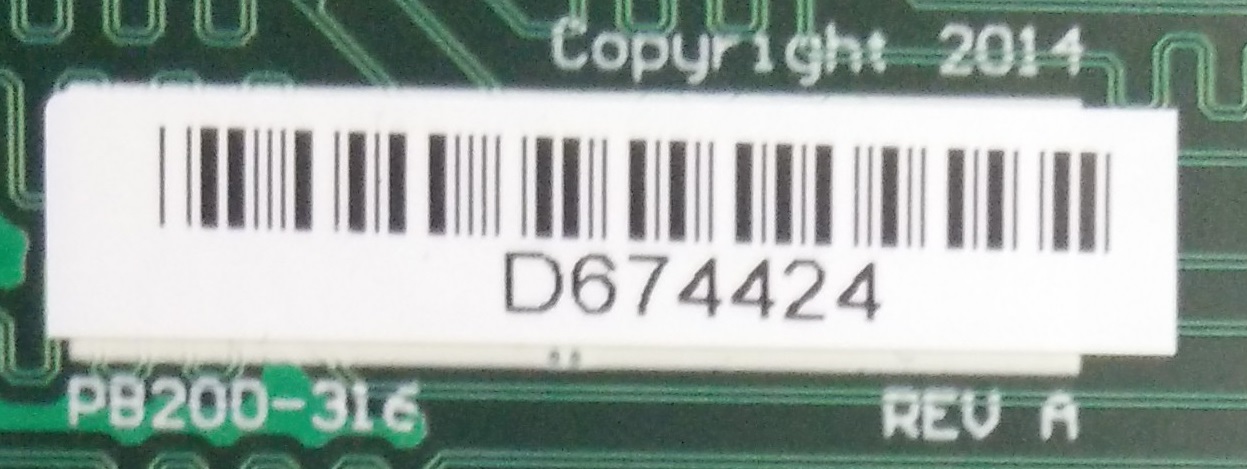
The Nexys Video is currently on its initial release revision, Revision A. The revision of a particular board is indicated on the bottom side of the PCB next to the unique 6 Digit board number that begins with “D”.
Documentation
- Schematic –

- PDF Schematic of the PCB generated by Altium
-
- Technical description of the Nexys Video and all of its features. The Wiki page may contain more up-to-date information and fewer typos than the PDF.
- Getting Started Guide – Wiki
- Great starting point for new Nexys Video owners. Includes the kit contents, instructions for running the out of box demo, and instructions for building a simple design.
Design Resources
Reference Projects
- Basic User Demo – Wiki
- Basic demo that uses the onboard UART, Microphone, audio output, and GPIO devices.
- Nexys Video User Demo – Wiki The demo that is loaded in the QSPI flash at the factory. This complex design uses nearly every peripheral device on the Nexys Video.
- XADC Demo – Wiki
- Basic demo that shows a simple implementation with the Artix-7 XADC
- VGA Test Pattern with Mouse Overlay – Wiki
- This project generates a test pattern on the VGA port and also displays a pointer that can be controlled with a mouse attached to the USB-HID port
- Getting Started with Microblaze – Wiki
- Follow this introduction on how to get started with Microblaze using Vivado IP Integrator.
- Getting Started with Microblaze Servers – Wiki
- Follow this tutorial on how to get an echo server running with Microblaze using Vivado IP generator.
FAQ
This list will be populated as common questions are identified on the Digilent Forum.
Currently no entries.